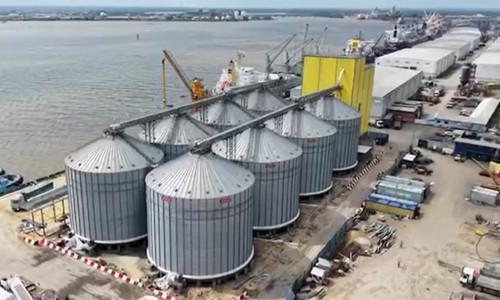
Douala, Cameroon — A Sudanese family has expanded its business activities in Cameroon with the opening of a major grain-storage facility at the Port of Douala, strengthening the port’s role as a strategic gateway for food commodities entering the country and the wider Central African region.
The investment comes at a time when food security and the reliability of agricultural supply chains have become increasingly important for Cameroon and neighbouring countries. By providing additional storage capacity close to the country’s principal maritime gateway, the facility is expected to support the handling, preservation and distribution of grains from the port to markets inland.
The development also illustrates the growing involvement of foreign-owned businesses in Cameroon’s logistics and food-supply sectors.
Douala’s strategic role
The Port of Douala is Cameroon’s principal maritime trade gateway and plays a central role in supplying the country as well as landlocked markets in the wider Central African region.
A grain-storage installation located within or close to the port can reduce pressure on the supply chain by allowing imported commodities to be stored before being transported to wholesalers, processors and other destinations.
For grain traders and importers, storage infrastructure can also provide greater flexibility in managing shipments and market demand.
The investment therefore has significance beyond the commercial interests of the operators. Its effectiveness will depend on how efficiently grain can move from vessels through storage facilities and onward to consumers and businesses.
Food security dimension
Cameroon has sought to strengthen domestic agricultural production while also relying on imports to meet demand for certain food commodities.
Additional storage capacity can help address one of the persistent challenges in agricultural markets: the preservation of food between production, importation and final consumption.
Properly managed storage can reduce post-harvest losses, improve the availability of commodities during periods of tight supply and help businesses maintain more consistent stocks.
However, storage infrastructure alone cannot resolve food-security challenges. Transport costs, production levels, import requirements, market prices and access to financing all influence the availability and affordability of staple foods.
A broader business presence
The Sudanese family's investment also highlights commercial links between Cameroon and Sudanese business communities.
Sudanese entrepreneurs have established commercial interests in several African countries, particularly in sectors connected to agriculture, trade, construction, manufacturing and services.
The grain facility at Douala could potentially provide a platform for expanded commercial activity in food commodities, depending on the company's future investment plans and market strategy.
For Cameroon, attracting investment into logistics and commodity-handling infrastructure is consistent with the broader objective of improving the efficiency of trade and strengthening the country's position as a commercial hub in Central Africa.
Importance of transparency
The opening of a major grain facility also raises questions that will be important for assessing its wider economic impact, including its storage capacity, investment value, number of jobs created and the commodities it is designed to handle.
Information on the ownership structure, operational arrangements and distribution networks would provide a clearer picture of the facility's contribution to Cameroon's food-supply system.
For now, the investment represents another development in the expansion of logistics infrastructure around the Port of Douala, with potential implications for grain imports, food distribution and regional trade.
As Cameroon continues to confront the twin challenges of strengthening food security and improving trade infrastructure, investments that connect maritime logistics with food distribution networks are likely to attract increasing attention from both policymakers and the private sector.